Our Company Provide Service And Best Maintenance.
Our Company Provide Service And Best Maintenance.
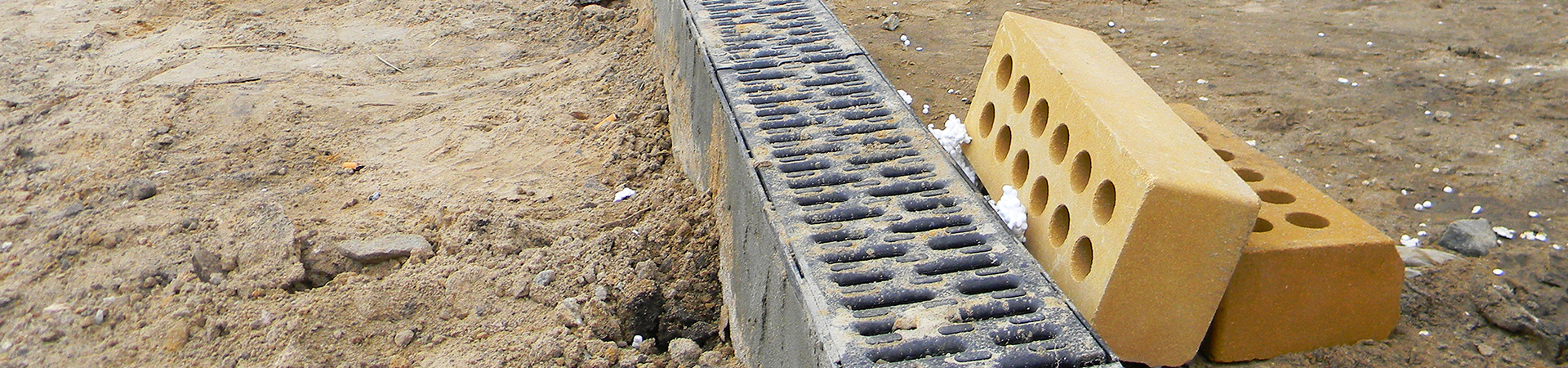
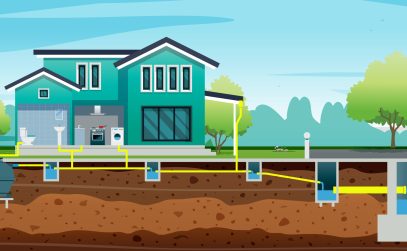
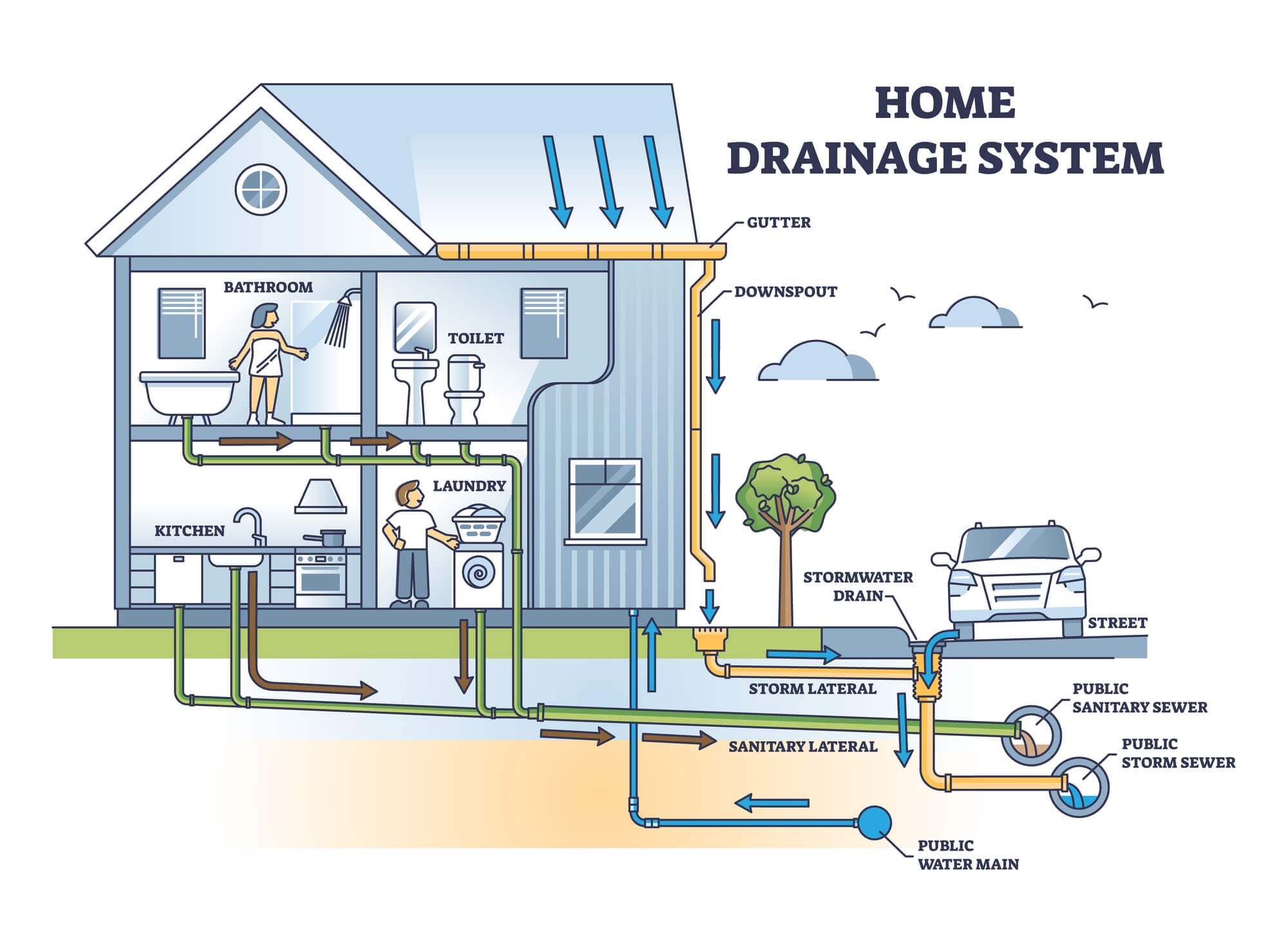
What is the drainage system around a house? It’s more than just gutters and downspouts—it’s a network designed to redirect water away from your home’s foundation. This network, which includes a foundation drain, protects your investment from water damage, ensuring its longevity and structural integrity. An effective drainage system safeguards your home from water damage, preserving its structural integrity and your peace of mind.
An effective home drainage system combines various elements working together. We’ll explore each part, discussing common problems and providing expert advice on maintenance.
Understanding how each component contributes to a fully functional drainage system helps homeowners proactively address issues. This knowledge empowers you to make informed decisions about maintenance and repairs, saving you potential headaches down the line.
Just like a healthy body relies on interconnected systems, your house needs a properly functioning drainage system to stay dry and damage-free. Let’s explore the crucial components that work together to keep your home safe from water intrusion.
Understanding how these components work together provides a comprehensive view of how water is managed around your home, highlighting the importance of each element in the system.
Gutters and downspouts are essential for channeling rainwater away from your roof and foundation. Gutters, typically made from aluminum or copper, collect runoff from the roof, while downspouts direct the water to a designated drainage area, such as a drainage pipe or the ground below.
However, they can become clogged with leaves, debris, and even nests, leading to overflows and potential water damage. Imagine a clogged artery – it restricts flow and can have serious consequences. Similarly, clogged gutters disrupt the smooth flow of water, potentially leading to damage.
It is critical to clean your gutters and downspouts at least twice a year, particularly in the fall and spring. During these seasons, falling leaves and debris tend to accumulate, obstructing water flow.
Regularly clearing debris ensures your gutters function optimally, preventing water from spilling over and causing damage to your home’s exterior and foundation.
The grading of your yard, often involving a process called foundation drainage, also significantly impacts drainage.
A proper slope directs water away from your home, preventing it from pooling around the foundation wall and causing soil moisture build-up. Aim for a slope of about 6 inches for every 10 feet away from the foundation, creating a gentle decline that encourages water runoff.
This simple yet effective strategy guarantees that rainwater naturally flows away from your home. This prevents water from seeping into the foundation walls or collecting in low-lying areas around your property. Think of it as creating a natural path of least resistance for water to follow, leading it away from your home’s foundation.
While gutters manage surface water, French drains address excess water underground, effectively managing soil moisture. These drains typically consist of trenches filled with gravel and a perforated pipe that collects and redirects water away from your home’s foundation, acting as a perimeter drain or footing drain.
This simple yet effective design intercepts water flowing through the soil and carries it away from your home.
French drains work best when the trench, sometimes referred to as a drain tile system, is properly sloped towards a suitable drainage area. They effectively address various water problems, including soggy lawns, foundation seepage, and flooded basements, making them a valuable addition to your home’s drainage system.
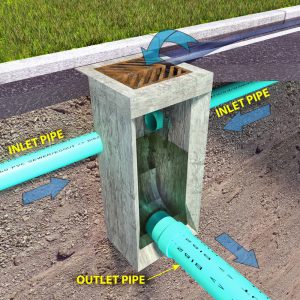
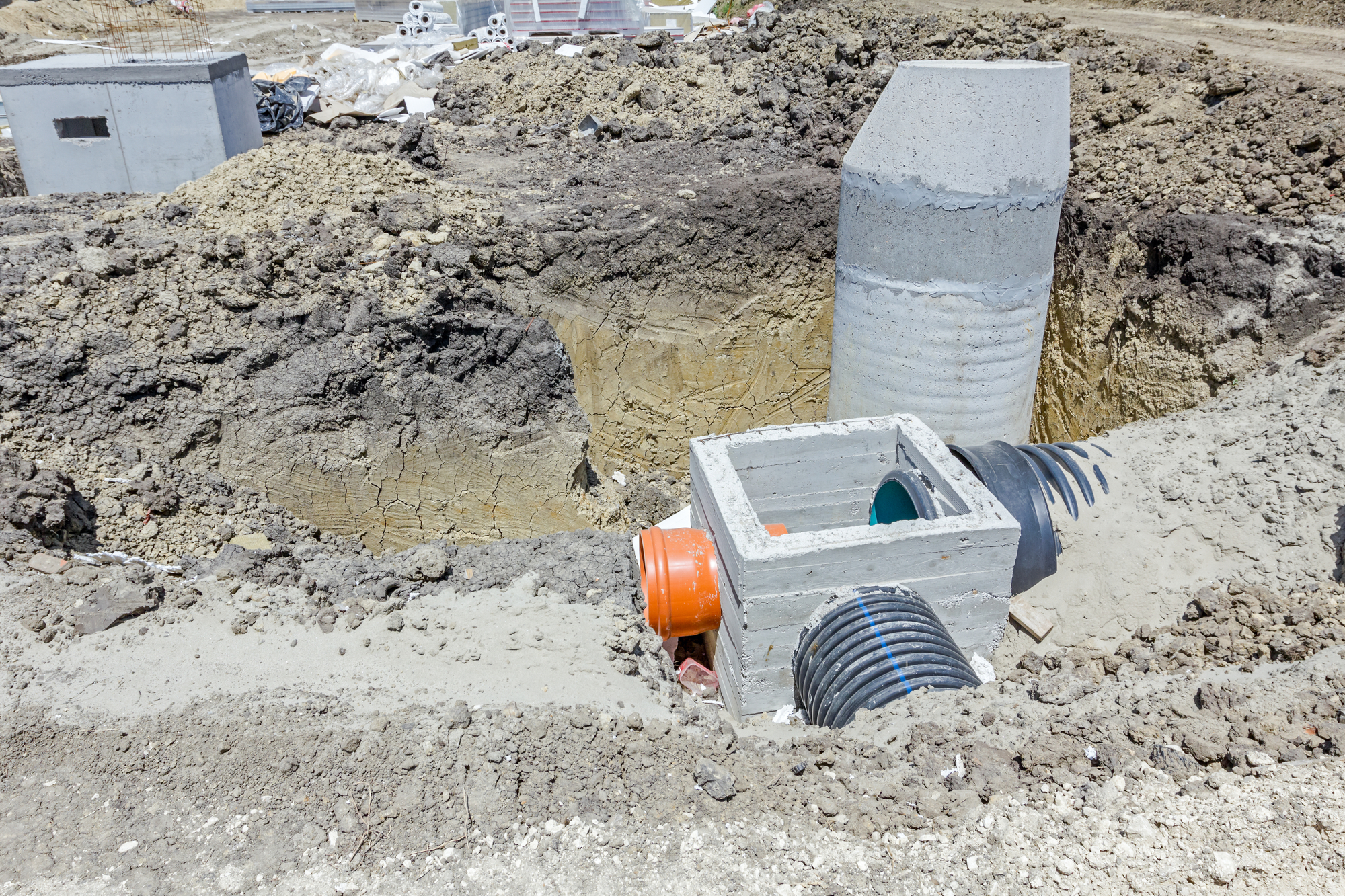
Strategically placed catch basins, also known as drain systems, are designed to capture large volumes of surface runoff. Often installed in areas prone to water accumulation, like driveways, patios, and other hard surfaces, these underground containers play a crucial role in preventing flooding. By collecting the excess water and gradually releasing it into the drainage system, they help prevent overwhelming the main drainage lines.
Think of them as strategically positioned reservoirs that temporarily hold excess water during heavy rainfall, discharging it at a controlled rate. This prevents backups and flooding, protecting your property from potential water damage.
Often used with interior drainage systems, sump pumps are important in areas prone to high water tables or basement seepage. Installed in a sump pit, typically the lowest point in a basement or crawlspace, this pump removes water that collects below the surface, effectively keeping basements dry.
When the water level in the sump pit rises, it activates a float switch that turns the pump on. The sump pump then pumps the collected water away from your house through a discharge pipe, preventing it from flooding your basement. This system provides a reliable solution for managing groundwater infiltration, especially in areas with heavy rains or high water tables.
Despite your best efforts, several issues can arise with your home’s drainage system. Recognizing these potential problems early can help prevent costly repairs and headaches down the road.
Leaves, twigs, and debris can quickly clog gutters, obstructing water flow and causing it to overflow. This can potentially damage your roof, siding, and foundation.
Regularly cleaning your gutters minimizes this issue, allowing water to flow freely away from your home. Maintaining clear gutters is important during the fall and spring when leaves and other debris are more likely to accumulate.
Flat or uneven grading around a home allows water to pool around the foundation, creating soil moisture build-up. This standing water exerts pressure against the foundation, potentially causing cracks, leaks, and basement flooding over time.
Maintaining a proper slope, with the ground sloping away from the foundation, helps guide water away from the house, safeguarding its structural integrity.
Cracks in your foundation, clogged footer drains, or malfunctioning sump pumps create an ideal environment for water to seep into your basement. Installing a foundation drain or improving the current one can improve water drainage.
These leaks not only lead to water damage but can encourage mold growth, posing serious health risks. Regularly inspecting and maintaining these components of your drainage system is crucial to preventing water intrusion and its associated problems.
Pooling water in your yard is more than just an eyesore—it damages landscaping, creates muddy patches, and can even attract mosquitos and other pests. Improper drainage solutions often lead to water pooling, especially in low-lying areas of your property.
Addressing low-lying areas, compact soil, and proper drainage solutions will resolve these issues, maintaining a healthy and enjoyable outdoor space.
If your yard has catch basins or French drains, it’s important to keep them free of debris and functioning properly. These drains are designed to handle large volumes of water, but their effectiveness depends on regular maintenance.
Clogged yard drains fail to redirect water effectively, contributing to flooding and soil erosion. Periodically inspecting and cleaning these drains will help prevent such issues and maintain the efficient management of runoff water on your property
Don’t wait for a drainage disaster. Proactively maintaining your home’s drainage system can save you money and headaches. A well-maintained system provides efficient water management, preserving your property and preventing costly repairs.
By investing in regular maintenance, you’re not just protecting your home from water damage; you’re also preserving the long-term value and integrity of your property.
Neglecting your drainage system could lead to issues that affect not just your basement but the overall structural integrity of your home. From foundation cracks to mold growth, poor drainage can cause extensive and expensive damage.
A well-maintained drainage system prevents soil erosion, protects your landscaping, and safeguards your home’s foundation, offering a solid return on your investment.
Now, when someone asks, “What is the drainage system around a house?” you’ll know it’s more than a simple answer. It’s a complex network of components working together to protect your home from water damage. It’s about understanding the importance of proper grading, functional gutters and downspouts, and the role of French drains and sump pumps.
It’s about protecting one of your most significant investments—your home. By understanding and maintaining your home’s drainage system, you’re taking a proactive step in preserving its value, structural integrity, and the comfort of those who live within its walls. Remember, a dry home is a happy home.
For more insights on managing your drainage and landscape needs, check out our blog and consider TurnKey Drainage for expert drainage and landscape services. Our team is ready to help you keep your property in top shape.


 Turnkey Drainage