Our Company Provide Service And Best Maintenance.
Our Company Provide Service And Best Maintenance.
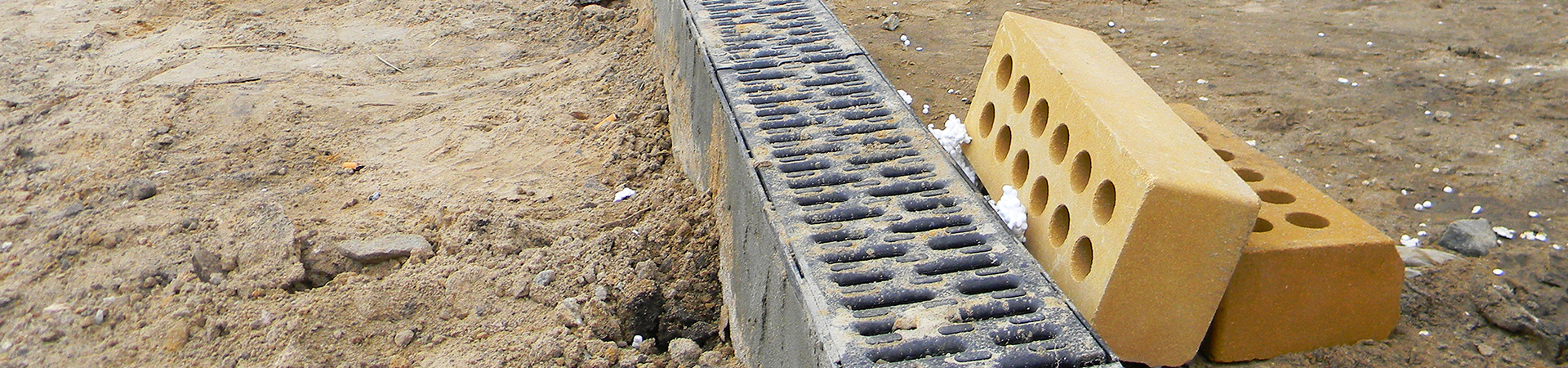
Channel drains and French drains both solve drainage problems in New Orleans driveways and patios, but they work differently and suit different situations. Channel drains collect surface runoff along a linear opening and are ideal for hard surfaces like concrete and pavers. French drains collect both surface and subsurface water across landscape areas. Understanding which system fits your situation prevents costly mistakes.

If water pools on your driveway, streams across your patio, or floods the area between your home and the street after every rain, you need a drainage solution designed specifically for hard and semi-hard surfaces. Two systems come up most often in these situations: channel drains and French drains. They solve different problems, and choosing the wrong one wastes money without fixing the issue. TurnKey Drainage helps New Orleans homeowners and property managers identify the right drainage solution for every surface type and water source. Here is how to think about the choice.
A channel drain, also called a trench drain or linear drain, consists of a long, narrow trough installed flush with a hard surface, topped with a grate. Water that sheets across the surface flows into the channel opening along its entire length and is carried by the sloped trough to an outlet pipe at one or both ends. The outlet connects to an underground pipe that carries water to a storm drain, drainage ditch, or other approved discharge point.
Channel drains excel at capturing surface runoff from large paved areas quickly. A single channel drain installed at the low end of a sloped driveway, or across the entrance where the driveway meets the street, intercepts water before it can flow toward the garage or home. The linear opening means water does not need to travel far horizontally to reach the drain, making channel systems fast-acting during heavy rain.
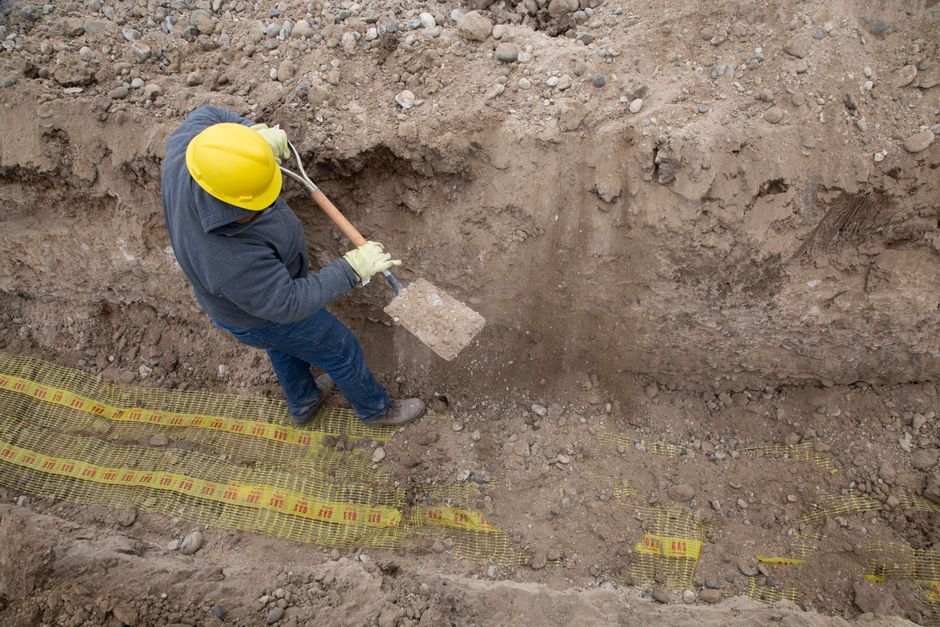
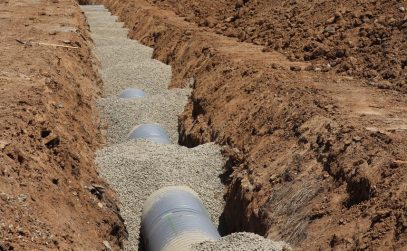
A French drain uses a perforated pipe buried in a gravel-filled trench. Water flows into the gravel from the surrounding soil and through the pipe perforations, then is carried by the pipe to a discharge point. French drains collect water from both the soil surface and from the saturated soil around the trench, making them effective for both surface flooding and subsurface groundwater management.
French drains work best in landscape areas, garden beds, and lawn areas where water moves through or across soil. They are not the right choice for driveways and patios where runoff sheets across an impermeable surface, because the water never contacts the soil where the perforated pipe can collect it. For a complete explanation of French drain design and applications, see our dedicated article on French drains in New Orleans.
Many New Orleans properties need both systems working together. A channel drain at the base of a driveway handles the surface runoff from the concrete. A French drain in the adjacent lawn area handles the groundwater saturation that the channel drain cannot address. catch basins at low points in the yard complete the system by capturing surface water that collects between the drain locations.
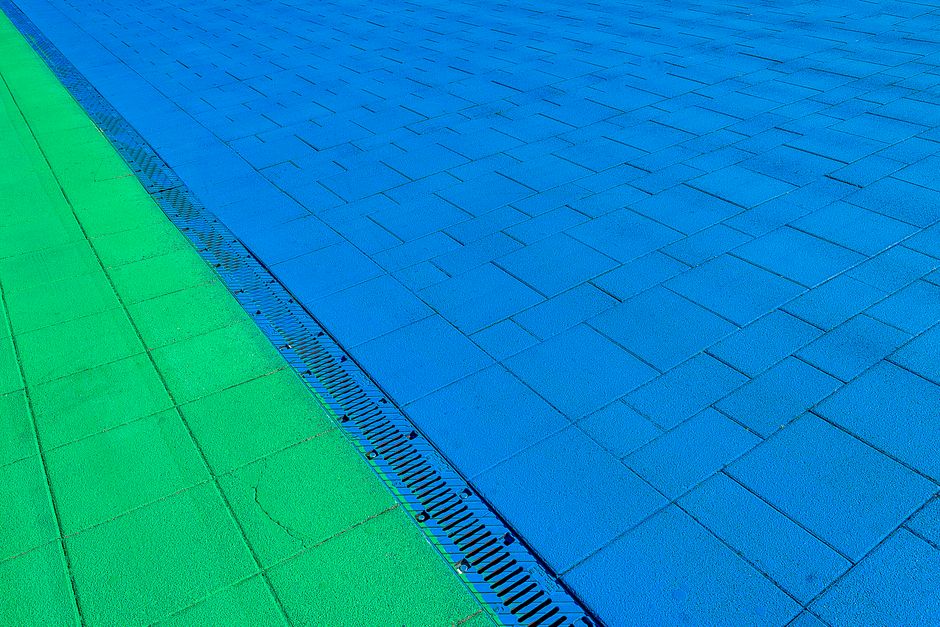
Channel drain systems come in several materials with different strength ratings and aesthetic options. Polymer concrete channels are the most common residential choice: durable, corrosion-resistant, and available in multiple load ratings for pedestrian or vehicle traffic. Cast iron channels and grates are traditional and extremely durable but heavier and more expensive. Stainless steel grates offer a cleaner aesthetic for patios and pool decks where appearance matters.
Grate slot width affects what debris enters the channel. Narrow slots keep out most debris but require more frequent cleaning. Wide slots pass debris to the channel below for easier flow but require more maintenance inside the trough. For driveways, heavier load-rated grates rated for vehicle traffic are required.
Installing the wrong drainage system for your surface type or incorrectly sizing a channel drain for your drainage area creates a system that underperforms or fails during heavy rain. Before investing in any drainage solution for your driveway or patio, get a professional assessment that accounts for your property topography, impervious surface area, and rainfall intensity.
If yard grading is contributing to the problem, that needs to be addressed as part of the solution. Our guide on yard grading and re-sloping explains how slope correction and drain installation work together. TurnKey Drainage provides comprehensive landscape drainage services including channel drain and French drain installation throughout the New Orleans metro area. Call us at (504) 608-4832 or visit our contact page to schedule your free property assessment. Review our full drain services page to understand all the options available for your property.
A channel drain collects water along a linear surface opening and carries it to a discharge point, making it ideal for driveways and patios where water sheets across hard surfaces. A French drain uses a perforated pipe in a gravel trench to collect both surface and subsurface water across a landscape area. Channel drains handle surface water; French drains handle both surface and underground water movement.
Channel drains are generally better for driveways because they collect runoff directly from the concrete or paver surface along a line where water sheets toward a low point. French drains work better for yard areas adjacent to the driveway where subsurface water movement is the concern.
Channel drain installation costs depend on the length of the system, the type of grate material, and whether it connects to an existing drain line or requires new underground piping. TurnKey Drainage provides free written estimates. Most residential channel drain installations range from $800 to $3,500 depending on these factors.
A properly sized channel drain handles the flow rate from typical New Orleans rain events. The key is correct sizing: the channel width and depth must be matched to the drainage area it serves. An undersized channel drain will overflow during heavy storms. Professional drainage contractors size systems based on local rainfall intensity data.
Yes. Channel drain grates and the trough beneath them collect debris, sediment, and organic matter that must be removed periodically. In New Orleans, cleaning twice a year is typically sufficient for residential installations. Properties near mature trees may need quarterly cleaning to prevent debris from blocking flow.
Simple surface channel drain installations with a pre-manufactured kit are sometimes DIY-friendly if you have concrete cutting tools and basic plumbing knowledge. However, proper slope, connection to an appropriate outlet pipe, and correct sizing for your drainage area require professional assessment to get right the first time and avoid creating new drainage problems.


 Turnkey Drainage